Shutting Down Atlarch
Day before yesterday, I decided to shut down Atlarch at the end of the month.
It’s not a great feeling to decide to definitively shut down something that you’ve been working on and off for almost three years. But at the same time, as with a lot of these things, it’s also clarifying in so many ways.
I had the idea for Atlarch (though it was not called Atlarch at that time) close to more than a year or so before I started actually working on it. In fact I had almost started working on a different version of the same idea before I decided to go do a job.
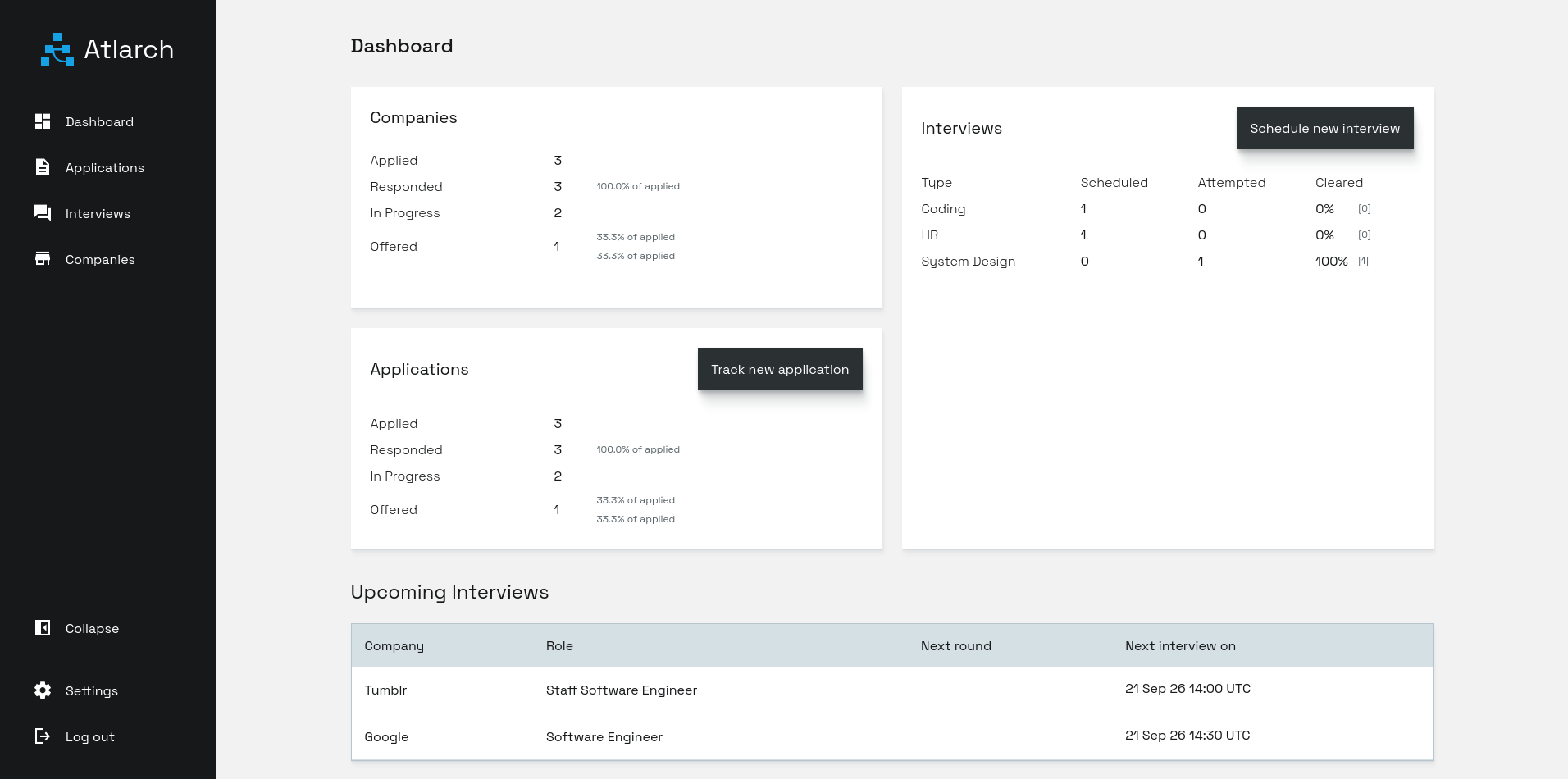
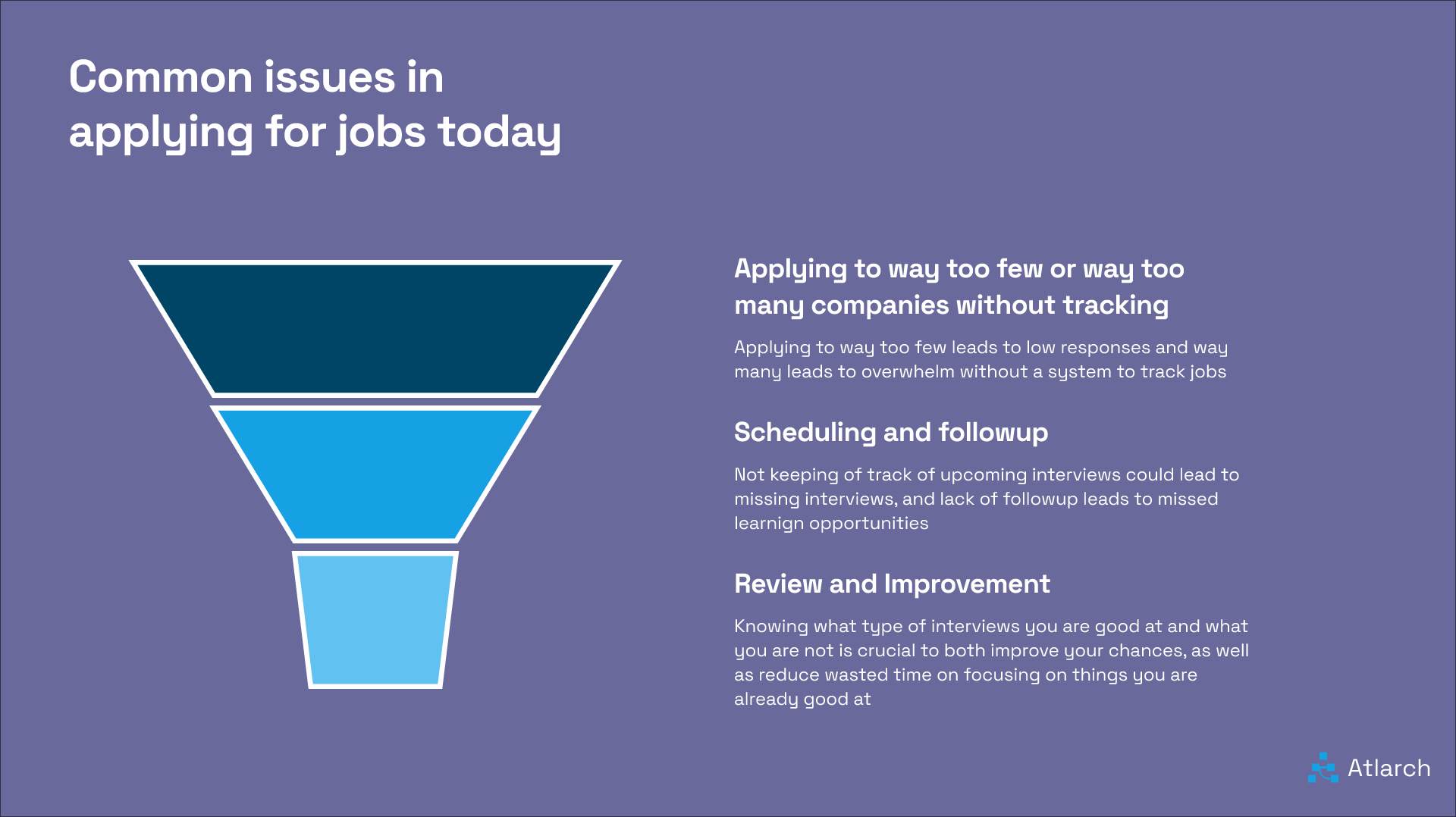
The idea was and still is simple. It’s a problem that I think everyone has experienced before, when you’re searching for a job, you end up applying to tons of places, and it would be nice to have a single place to organize your job search. The analogy I liked to give to people was that recruiters would have something like a CRM to help them organize things like how many people apply to job, what stage of the interview different people are in, along with various metrics on things like hire to apply ratio and so on. As someone applying for jobs, you have none of that. Atlarch would basically be the platform that would provide you those things.
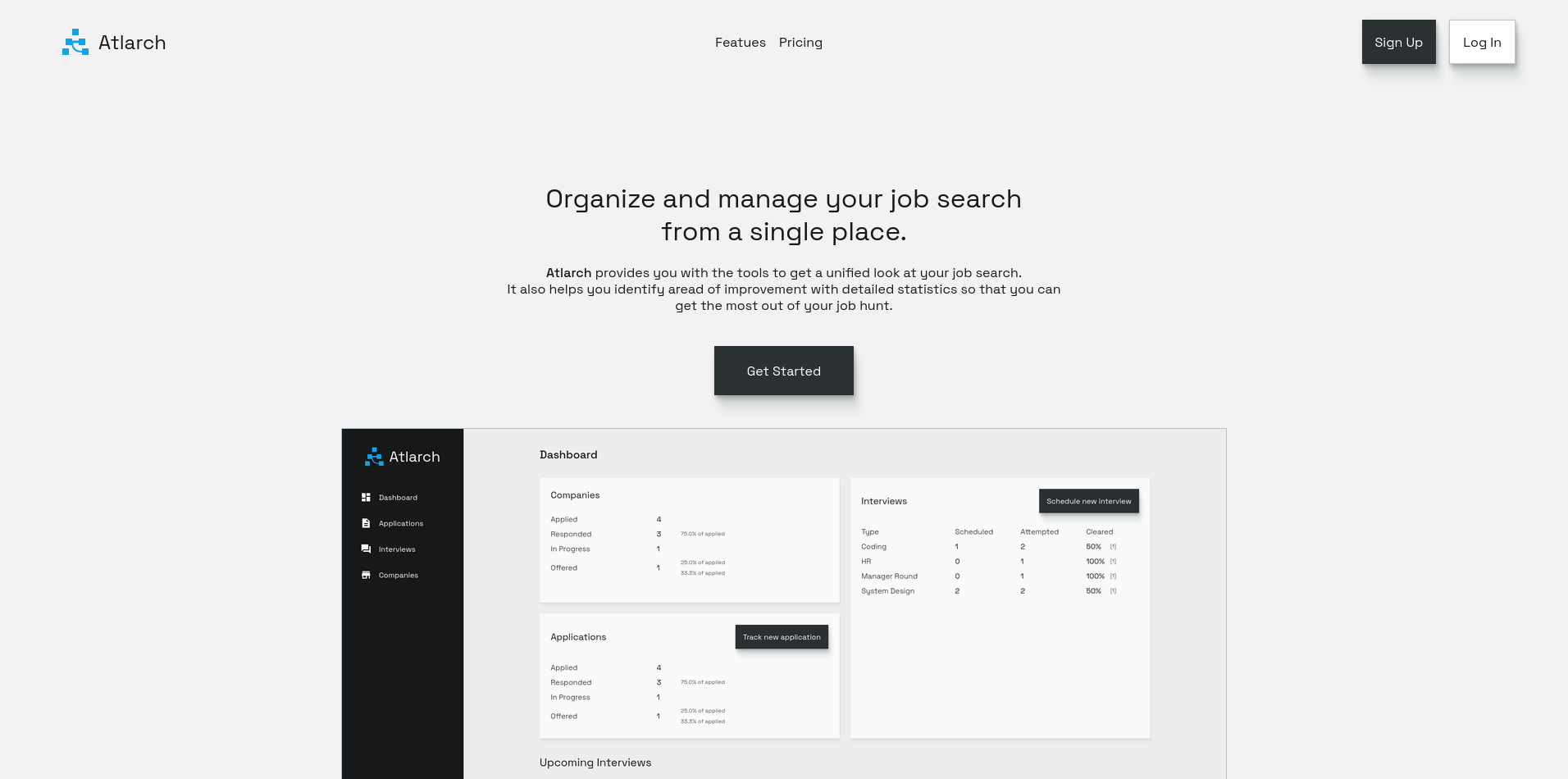
In that broad problem statement, I had so many ideas for features that I came up. The very first idea I had was regarding scheduling. If you’re interviewing at multiple places simultaneously, one of the things that you would want to do is for the offers to line up together as close as possible. Since most offers come with a relatively short time window where you have to confirm your decision, the idea was that having offers bunched up together would give you leverage in negotiating.
I also had ideas regarding adding metrics which would nudge you correctly towards either improving your application numbers or improving your interviewing skills. There were also a whole backlog of ideas including to autofill applications at scale. More ambitiously I had hoped to expand Atlarch to be useful in a college setting to help in placement of graduates.
Atlarch to me was first and foremost a personal project. It was an experiment. I have always wanted to have the entire skill set to build a company from scratch from building a product, design, engineering, marketing, administration and so on. Consequently, I spent a lot of the time learning those skills and Atlarch was the testbed to apply them. It’s worth being clear, my intention for this was not due to an aversion with working with people, which I enjoy.
When I started out I had very superficial knowledge of the web platform and pretty much no knowledge of design. I learnt both of those skills to a relatively competent level and was able to apply them to an actual product during this time.
From the above paragraphs you might have caught on, the thing I didn’t do, or do enough of was marketing. The thing that makes it particularly damming for me was that I knew from the beginning how crucial it was. Everyone knows the story of an engineer building a product with a “If you build it, they will come mentality”, I knew about it and yet I became the same proverbial engineer. If you’re an engineer who hasn’t fallen into this trap before, it’s really hard to express why this is such a hard trap to avoid. If at you’re core you have an engineering mindset, there is probably no way to avoid it, and as such you should get over it by building a product and experiencing the disappointment once. If there is any lesson I suppose I could offer, it would be to get out of it quicker than I did.
I do wish I spent a lot more on marketing, because I think I would have enjoyed it, in fact I was looking forward to it. I think one of my biggest inhibition was that I didn’t want to ramp up marketing, until I finished specific features and there were always some new specific features that would be incomplete. All of this meant that I built it, but they never came.
If not doing marketing was the proximal cause of why Atlarch didn’t succeed, working alone or more accurately working isolated was the overarching reason. As I mentioned earlier, one of the goal for me while working on Atlarch, was to build the entire skill set needed to build a company. I think this goal by itself was and still is achievable, but trying to do this alone and in an environment where no one else around you is doing what you’re doing and you have no one to compare notes with is not trivial. It’s not simply a case of motivation (although keeping yourself motivated is a huge part of it), but that you simply don’t have a reference point for progress when you’re working alone. There are so many times during this period I have realised that the benefit of having a cofounder is not primarily the complementary skills (since you can always theoretically develop those same skills), but much more importantly having someone who you can simply bounce ideas off of. Given that it’s not surprising why hotspots like Bali are popular even for supposedly solo-founders.
The final thing I want to note would be the time. I think a very rational decision making would have led me to stop working on this much quicker. Here I think my mistake was a combination of stubbornness, wishful thinking and making just enough progress to put me off from quitting. A common way people suggest making these kind of decisions would be time boxing, i.e, setting a definite time period after which you assess based on a concrete criteria if you want to continue or not. What I did was to time box, but also make small progress on things, and then use that as a justification to keep going.
During this broader period from my last job, I didn’t work on the product all the time. When I was not working on the product, among other things I spent a lot of time learning about an assortment of things, some related and some unrelated to building a product. For example, I completed a course on Basic Accounting along with the exercises by following lectures online Thank you Mr. Krug. The course has one of the funkiest intro music. On that tangent the CMU database courses still take the top spot when it comes to course intro music. . I spent some time learning about painting (superficially atleast in my mind this was related to design), and also about clip farms for User Generated Content (UGC) marketing. I dabbled in a lot of things a lot of which I personally think were edifying, but being a dilettante does defocuses you from shipping a product.
Although I was clear from the beginning that even though Atlarch was a personal project, it was meant to be a product company that could be useful to others, it did suffer from conflation with some of these other ulterior goals.
On one level I really didn’t want to stop working on this. Because I had no hard external deadlines, I spent a lot of time obsessively making things the best that I could make them. I was happy to jump into any rabbit holes that would show up, and there were a lot of rabbit holes around. Looking back I’m tempted to chalk it up as procrastination and in some ways it is, but I was earnest in making sure that what I was building was the “right thing”. I was leaning heavily into engineering which I liked doing, willfully ignoring the actual goal of making a product that people use. The ironic thing is the fact that I focused so much on engineering is the thing that eventually constrained me from working further on engineering by not having a product with lots of users who might benefit from those features.
This is the main reason I’ve decided to shut it down definitively. Because if I don’t do that I’ll keep tinkering with things, and it might eventually succeed, but it would have taken an unacceptably large amount of time. Even in the end, just weeks ago, I was puttering around building a extension which used browser based AI for autofilling forms. In the end, I think the length of time I spent on this was my most egregious mistake.
Overall, I’m glad I did work on this product. And I got to build an entire product end to end. I’m very happy with what I built technically, but there was a lot more I wish I did build, and could have, had it not for some of the things I mentioned above. In no way has this experience made me not consider building another company, if anything it has made me look forward to it even more.
I hope to return back to building very soon.